
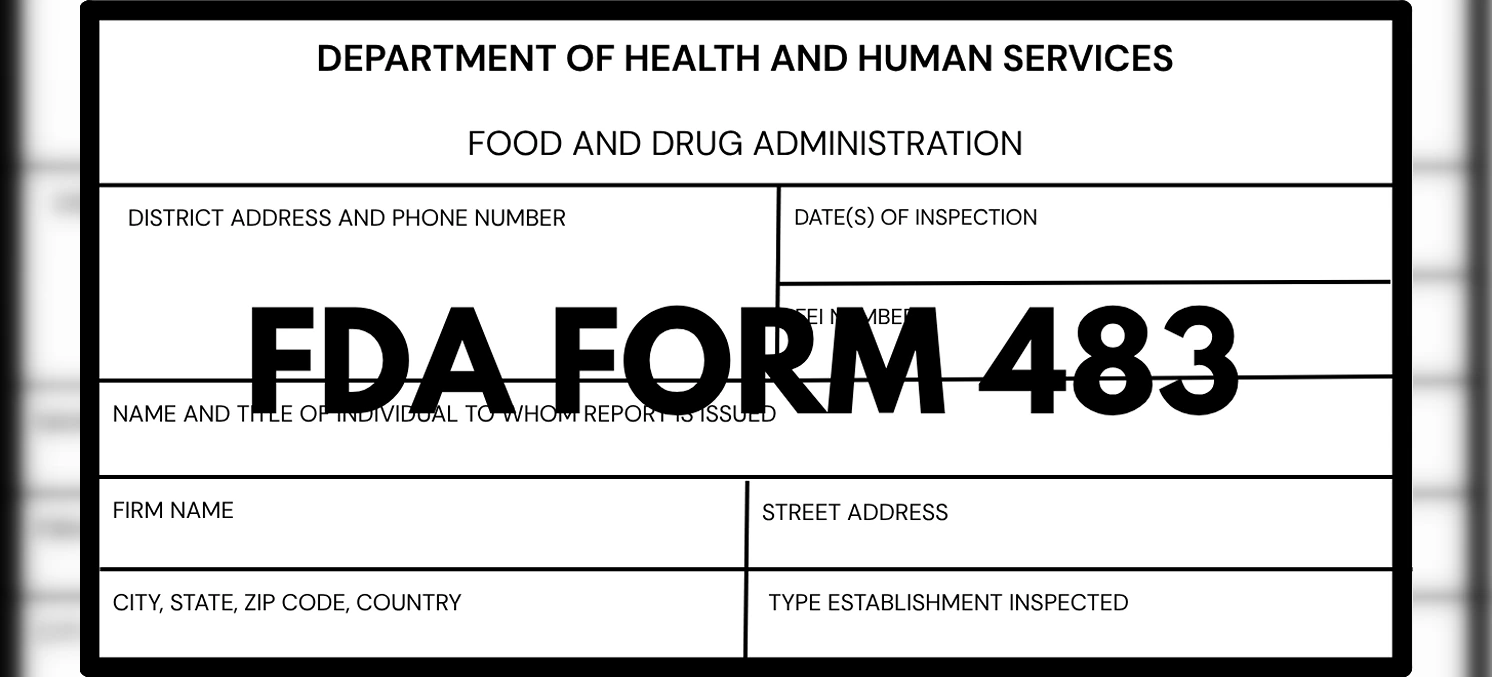
Top 10 Reasons FDA Form 483 Is Issued To Pharmaceutical Industry
1. Procedures Not Established or Not Followed (SOPs and Process Control)
Common cites: 21 CFR 211.100(a) (written production/process control procedures), 211.22(d) (quality-unit procedures), and 211.100(b) (failure to follow and document deviations).
Inadequacy or absence of written procedures, and deviation from established SOPs without proper justification, is one of the major reasons for drug-product failure, thus leading to issuance of Form 483.
2. Weak Laboratory Controls and Non-Science-Based Methods
Common cites: 21 CFR 211.160(b) (scientifically sound lab controls), 211.194 (complete lab records).
The specifications, standards, sampling plans, and test procedures established may not be scientifically justified or may be inadequate. Laboratory records regarding deviations that are unjustified or missing raise data integrity concerns, resulting in Form 483.
3. Failure to Thoroughly Investigate Deviations and Out-of-Specification (OOS) Results
Common cite: 21 CFR 211.192 (production and control record review; investigation of discrepancies).
Failure to thoroughly investigate OOS results or discrepancies during product testing, not analyzing root cause, and not evaluating impact on other batches or products often results in Form 483.
4. Equipment Cleaning, Maintenance, and Contamination Control Failures
Common cites: 21 CFR 211.67 (equipment cleaning/maintenance), 211.113(b) (control of microbiological contamination in sterile products), and 211.42/211.63 (facility and equipment design).
Incomplete cleaning procedures, inadequate validation, dirty or damaged equipment, poor environmental controls, and ineffective microbial controls in sterile or high-potency manufacturing sites frequently lead to Form 483.
5. Inadequate Process Validation and In-Process Controls
Common cites: 21 CFR 211.110(a) (control procedures to monitor/validate performance) and related validation expectations under 211.100(a).
Weak in-process controls or inadequately validated processes, especially in formulation development, may lead to unstandardized manufacturing and eventual Form 483 observations.
6. Documentation, Batch Record, and Data Integrity Deficiencies
Common cites: 21 CFR 211.188 (batch production and control records), 211.194 (lab records), and related data integrity expectations.
Incomplete batch records, missing signatures, back-dated entries, undocumented changes, and poor control of electronic data and audit trails are major reasons why FDA issues Form 483.
7. Component, Container, and Closure Control Gaps
Common cite: 21 CFR 211.84(d) (testing/examination of components and containers before use).
Inadequate testing of components, containers, and closures, along with over-reliance on unverified suppliers, impacts product identity and impurity profile, resulting in Form 483.
8. Stability Program Deficiencies
Common cite: 21 CFR 211.166 (stability testing program).
Unscientifically designed stability protocols, missing data sets for certain dosage strengths, or inadequate packaging studies are recurring causes of FDA Form 483.
9. Inadequate Personnel Training and Qualification
Common cite: 21 CFR 211.25(a) (personnel qualifications and training).
Personnel assigned to cGMP functions may be inadequately trained or lack sufficient experience. Lack of periodic training on updated regulations often contributes to major systemic failures.
10. Quality System and Change Control Weaknesses
Common cites: 21 CFR 820.100, poor change control.
Changes made to processes, equipment, or software that are not properly assessed or approved, CAPA procedures closed without proper analysis, and unresolved previous Form 483 issues often lead to repeat observations.